Safety · Machinery Safety · 9 min read
The Guard Was There—but the Danger Was Still Reachable: Fatal Conveyor Safety Lessons
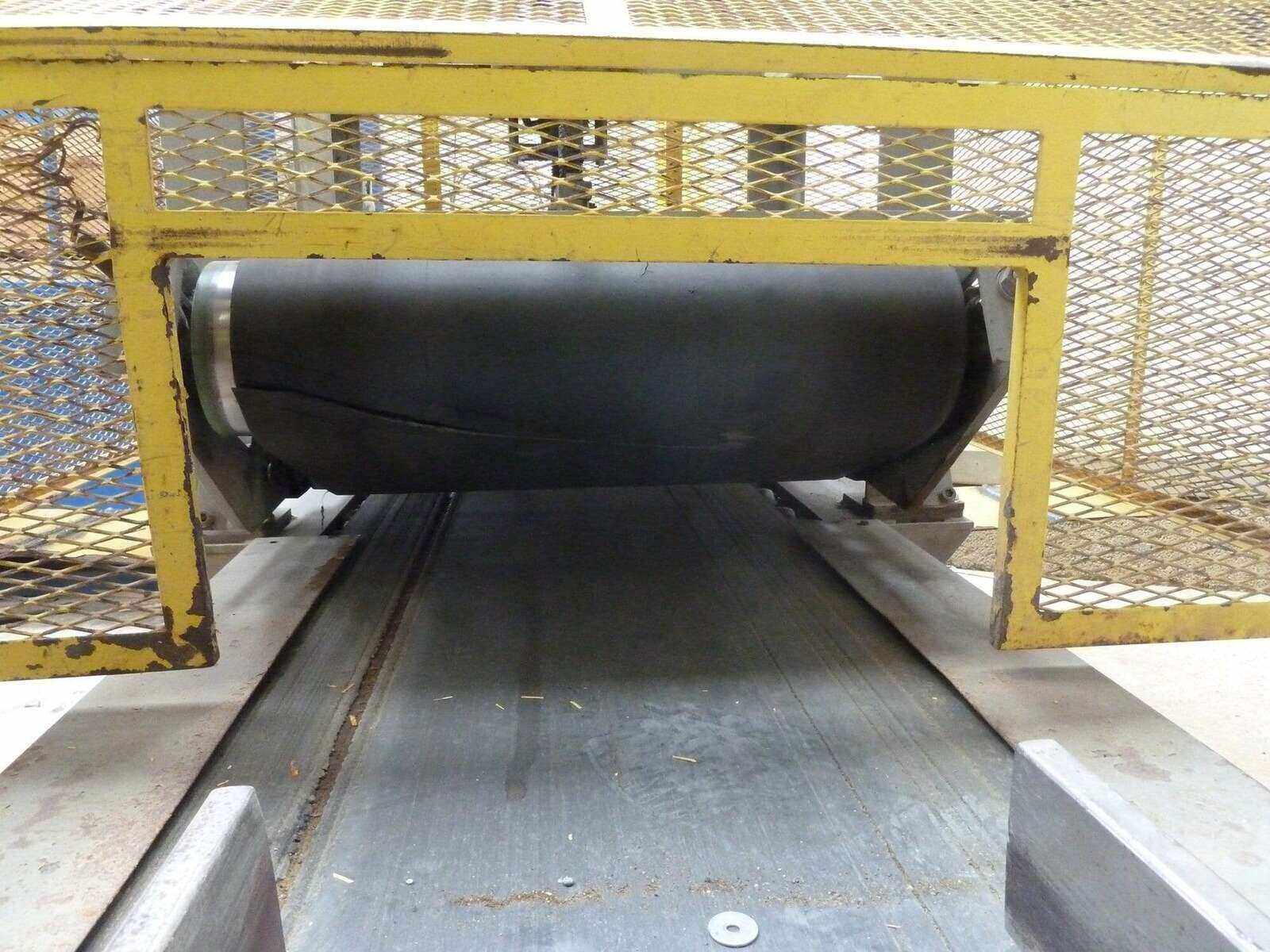
A machine can look guarded and still expose a worker to a fatal hazard. The decisive question is not whether a guard exists—it is whether the guard actually stops anyone from reaching, falling or being drawn into moving machinery.
What happened at the Dagenham aggregates depot?
On 24 June 2020, 34-year-old production operative Manjit Kumar was operating a bag-flattening conveyor at Gill Aggregates Limited’s depot in Dagenham, East London. According to Britain’s Health and Safety Executive (HSE), he was drawn through an opening in the fixed guarding and into the compression conveyor.
His colleagues raised the alarm and stopped the equipment. The guarding then had to be dismantled so he could be recovered. Mr Kumar suffered severe crush injuries and died in hospital several days later.
HSE reported that the fixed guard contained an opening measuring about 600 mm wide by 335 mm high. That opening allowed access to dangerous moving parts. Further guarding was installed after the incident.
The legal outcome
Gill Aggregates Limited pleaded guilty to breaching Regulation 11(1) of the Provision and Use of Work Equipment Regulations 1998 (PUWER). On 28 September 2026, the company was fined £24,000 and ordered to contribute £43,000 toward costs.
These are the confirmed findings reported by HSE. This article does not speculate about Mr Kumar’s actions or add causes that were not established in the regulator’s report.
Why “a guard is fitted” is the wrong test
A guard is a safety barrier, not a decoration or a checklist item. It is effective only when its size, position, strength and openings prevent contact with every dangerous part during foreseeable work.
People do not need to deliberately climb inside a machine to be harmed. Clothing, gloves, tools, packaging or loose material can be caught and pulled into an in-running nip. A person can also slip, lean, reach through a gap or be drawn toward the hazard before an emergency stop can help.
That is why a visual check that simply records “guard present” is too weak. A proper inspection asks whether danger remains reachable from every realistic approach.
Where conveyor hazards are commonly found
- Head and tail pulleys: the belt can pull a hand, arm, clothing or tool into the rotating drum.
- Return rollers and idlers: accessible in-running nip points can trap and crush.
- Drive chains, belts, gears and couplings: rotating transmission parts can catch clothing or body parts.
- Compression and transfer points: loads, belts and fixed structures can create crushing zones.
- Feed and discharge openings: the process may require an opening, but its size and distance must still prevent access to danger.
- Interfaces between machines: a safe individual machine can become hazardous where it joins another system.
Seven controls that prevent conveyor entanglement
- Use fixed enclosing guards where practicable. Guards should be securely fixed and normally removable only with tools.
- Control every opening. Apply the relevant safety-distance standard to mesh, slots, gaps, feed points and spaces below or beside guards.
- Interlock access that must open. Hazardous movement must stop before a person can reach the danger zone, and the machine must not restart simply because the guard is closed.
- Design routine tasks without guard removal. Tracking, lubrication, sampling and inspection points should be safely accessible without exposing moving parts.
- Isolate before intervention. Stop, isolate, lock off, release stored energy and prove the equipment cannot start before clearing blockages, cleaning or maintenance.
- Inspect after every change. Recheck safeguarding after relocation, modification, repair, belt adjustment or a change in material or operating method.
- Verify in the field. A competent person should examine actual reach paths and foreseeable behaviour, not rely only on drawings or paperwork.
Emergency stops are not guards
Pull wires and emergency-stop buttons can reduce the consequence of an event, but they do not prevent access to danger. A trapped person may be unable to reach them, and machinery may continue moving while it runs down.
Emergency stops are additional protection. They do not replace effective guarding, safe distance, interlocking or isolation.
Watch: surface mine conveyor safety
This U.S. Department of Labor video explains guarding, blocking against movement and lockout/tagout around surface conveyors. The examples come from mining, but the core lessons apply to conveyors in aggregates, manufacturing, logistics, food processing and recycling. Site procedures and local legal requirements always take priority.
A practical guarding inspection
Walk the complete conveyor while it is safely stopped and assess it from each side, platform, stair, walkway and nearby work position. Include points that people can reach with a hand, arm, leg, tool or loose item.
- Can anyone reach a belt, roller, pulley, chain, coupling or crushing point?
- Could a person fall or be pulled through an opening?
- Are guards strong, complete and securely fixed?
- Are interlocks difficult to defeat and tested at a defined frequency?
- Can cleaning and blockage removal be completed only under verified isolation?
- Have spills, wear, vibration or production changes damaged or displaced guards?
- Does restart require a deliberate action after the area is checked and clear?
Record defects by exact location, control access immediately and assign a responsible person and completion date. Do not restart equipment with a known path to dangerous movement.
Questions leaders should ask
- Which conveyor opening is easiest to reach through, over, under or around?
- When was the last competent safety-distance review completed?
- What tasks tempt people to work near a moving belt?
- Can every energy source be isolated, locked and proved dead?
- Who authorises a conveyor’s return to service after guarding is changed?
- Do inspections confirm prevention of access, or merely record that guards exist?
Sources and further guidance
- HSE — Aggregates company fined after worker killed in conveyor crushPublished 29 September 2026
- HSE — Provision and Use of Work Equipment Regulations (PUWER)Official guidance
- HSE — Conveyor and machinery guarding guidanceOfficial guidance; updated 29 October 2024
- U.S. Department of Labor — Surface Mine Conveyor SafetyTraining video
Your experience matters
Share your thoughts on this page
Have a question, a useful experience or a suggestion? Add your input below.
Comments are public. Keep them respectful and relevant. Do not share contact details, confidential information or emergency reports.
Comments on this page
Loading comments…